LocalOutlierFactor
A density-based anomaly score: each point is compared to the local density of its neighbours, flagging those in relatively sparse regions as outliers.
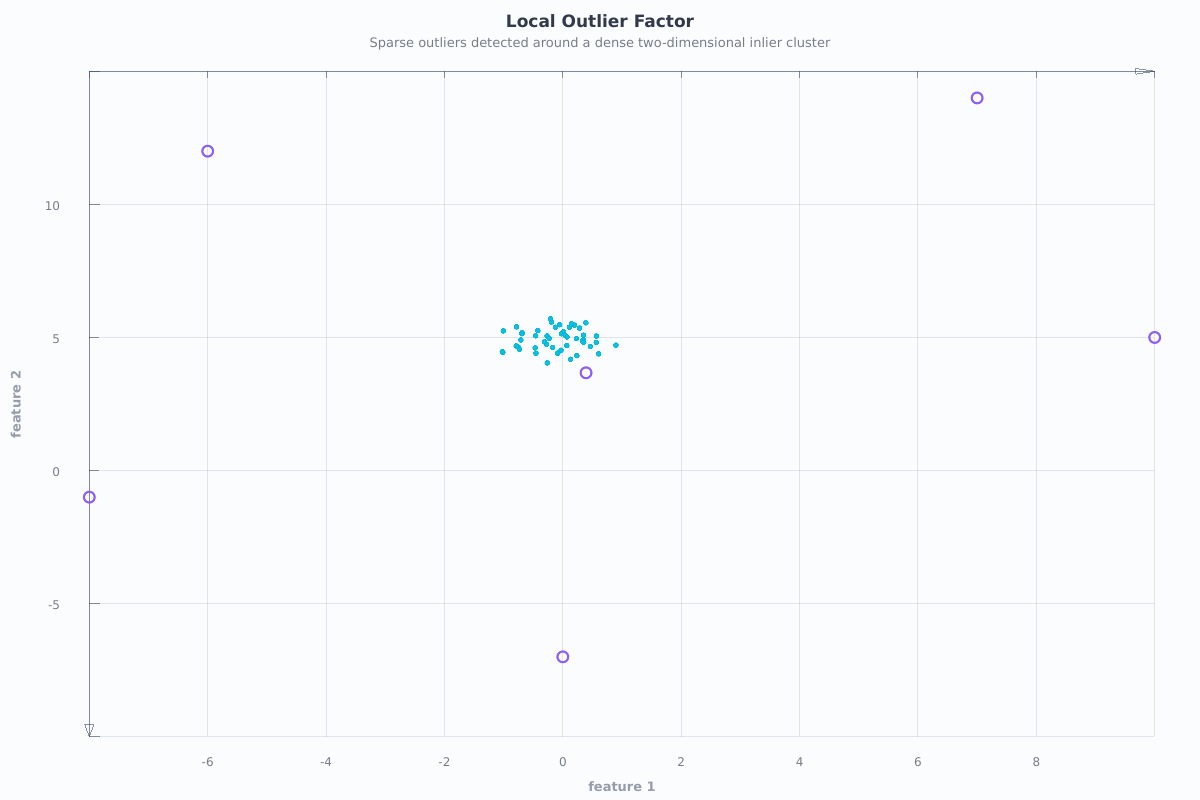
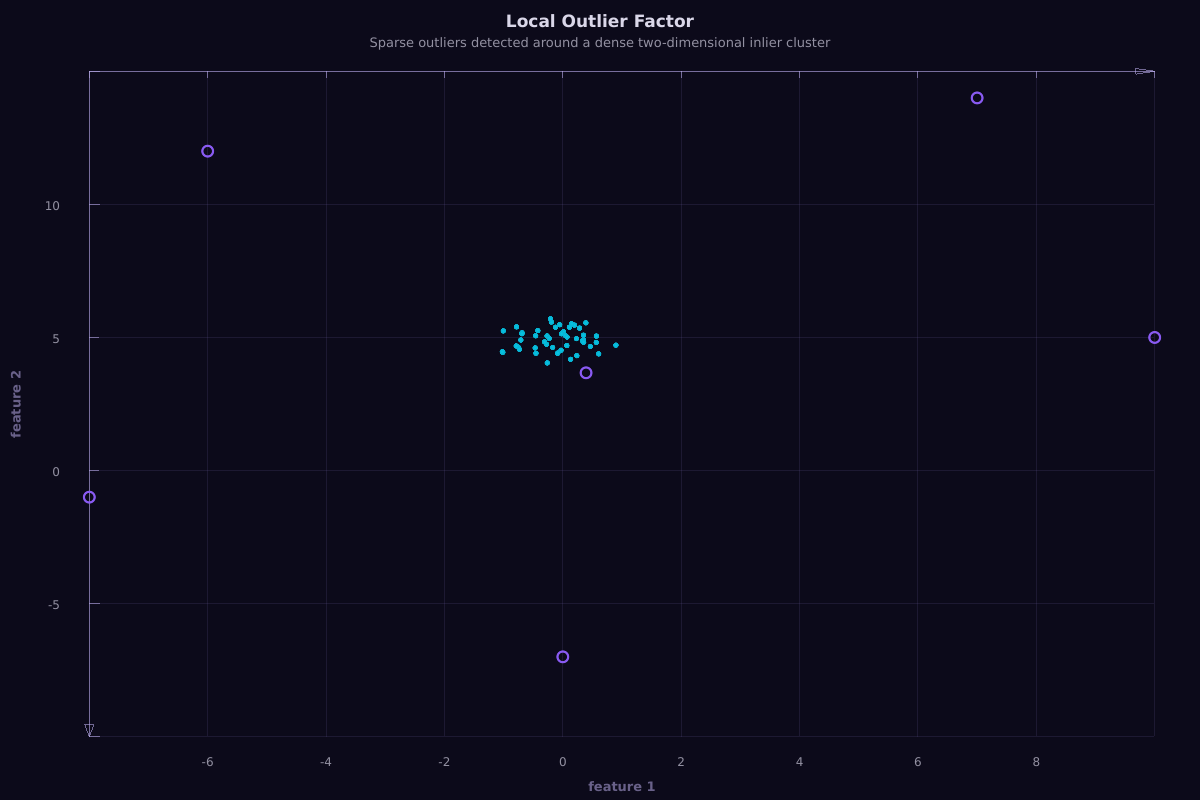
The examples/neighbors/local_outlier_factor.cpp program renders a dense inlier cluster with detected outliers highlighted:
Algorithm
Computes the local reachability density of each point and the ratio to its neighbours' densities (the local outlier factor). Scores far below 1 indicate inliers; large scores indicate outliers. Exposed as the negated factor to match scikit-learn's convention.
Constructor
Skigen::LocalOutlierFactor<Scalar> model(int n_neighbors = 20, Scalar contamination = -1);
Parameters
| Parameter | Default | Description |
|---|---|---|
n_neighbors | 20 | Neighbours used for the density estimate. |
contamination | -1 | Expected outlier fraction; -1 disables automatic thresholding. |
Methods
| Method | Description |
|---|---|
fit(X) | Score every training point. |
fit_predict_labels(X) | Inlier/outlier labels. |
Fitted Attributes
| Accessor | Description |
|---|---|
negative_outlier_factor() | Negated LOF scores (lower = more anomalous). |
n_neighbors_used() | Effective neighbour count. |
Example
Skigen::LocalOutlierFactor<double> lof(20);
lof.fit(X);
auto scores = lof.negative_outlier_factor();
This estimator is checked by the parity suite. See the generator tests/parity/generate_neighbors_reference.py and the reference fixtures in tests/parity/data/local_outlier_factor/, exercised by tests/parity/parity_neighbors.cpp.
For full signatures see the LocalOutlierFactor API Reference.